



article_detail
  • CONTACT
  • ADVERTISE WITH US

  • Home
  • Spanish News
  • Covid 19
  • Property News
  • Motoring
    & Travel
    • All Motoring & Travel News
    • Driving In Spain
    • Spanish Motoring Laws
  • lifestyle
  • Travel & Tourism
  • Art & Culture
EDITIONS: Murcia Today Alicante Today Andalucia Today
article_detail

The Roman villa of Los Cantos in Bullas


Wine production was already a feature of the Bullas economy in Roman times

The Roman villa of Los Cantos in Bullas

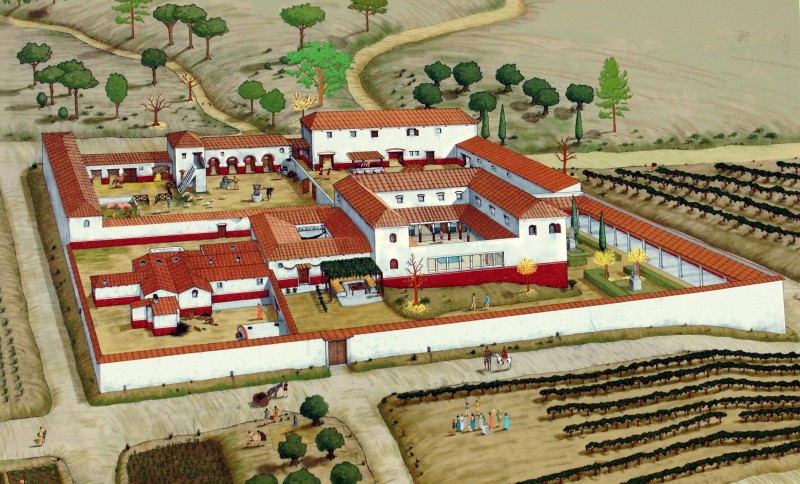
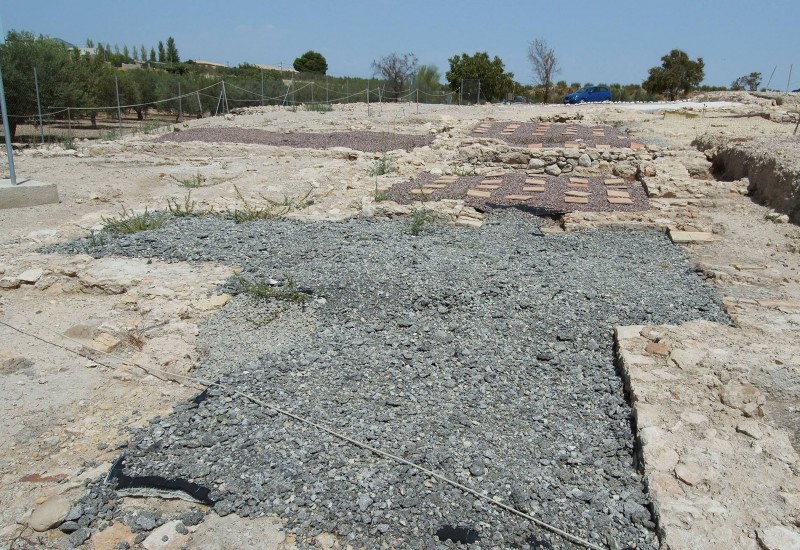
The Roman villa of Los Cantos, just outside the town of Bullas in the north-west of the Region of Murcia, is located close to the MU-503 road which leaves the town and heads for Zarzadilla de Totana, and is in many ways typical of the numerous villas which marked the colonization of rural areas in the south-east of Spain during the centuries around the birth of Christ. 
The Roman villa of Los Cantos in Bullas

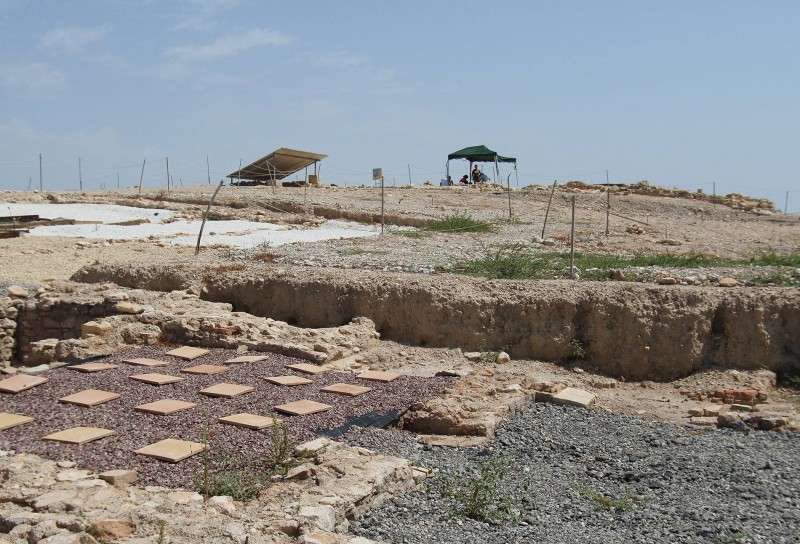
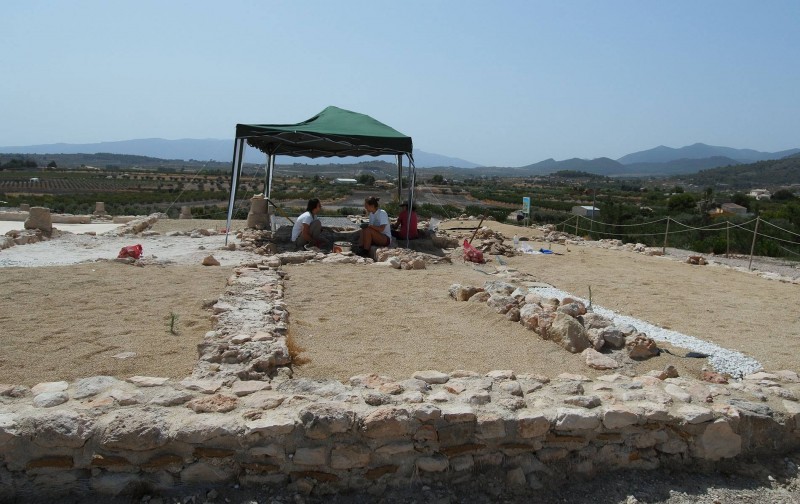
That the Romans found agriculture a productive activity in the countryside around Bullas is evident from the fact that artifacts have been found here dating from as early as the second century BC and as late as the 5th century AD. It can thus be deduced that they stayed for around 700 years, and the complex includes not only a residential area, where the landowner would have spent part of the year, but also a thermal bath area and the actual farm installations where production was carried out.
The Roman villa of Los Cantos in Bullas

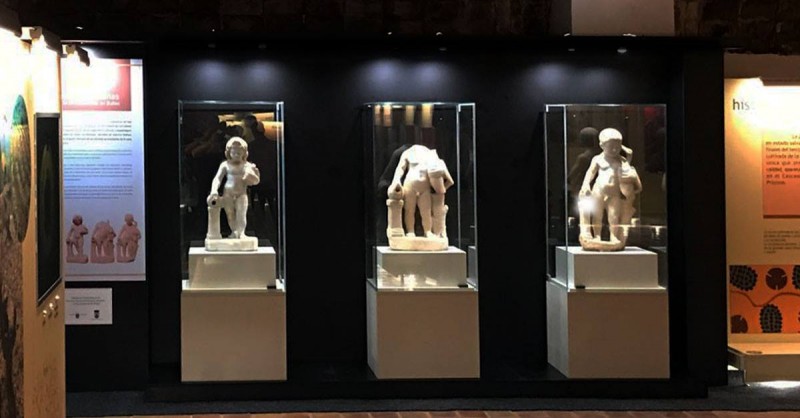
It can also be assumed that grape-growing and wine production were already an important part of the economic activities in Bullas during the period of Roman occupation. This was made clear in the 1860s, when the site was first excavated, by the discovery of four statues which were located at the four corners of a central patio. These figures, which formed part of an ornamental system to gather rainwater and irrigate a garden area during the drier months, represented the four seasons of the year. 
The Roman villa of Los Cantos in Bullas

One of the statues featured a young boy who is assumed to represent the god Bacchus (or Dionysius) holding a bunch of grapes, but unfortunately all four were removed from the site and it was not until 2016 that three of them were recovered by the police after a long investigation into their disappearance. But the "Niño de las Uvas" is still missing, despite some locals having strong opinions as to where he might be found, and it is only possible to see a replica of the statue in the Wine Museum of Bullas.

However, the three remaining statues are now on display in the Museo del Vino in Bullas.
The Roman villa of Los Cantos in Bullas

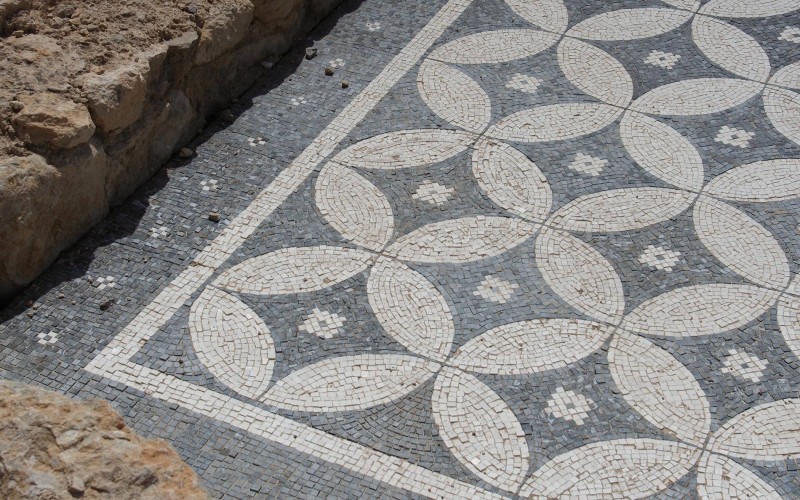
Another statue of Aphrodite which was found at the villa is now safely housed in the National Archaeological Museum in Madrid, and other items found at the complex include numerous fragments of mosaic floors, murals and marble sculptures. All of these indicate that Los Cantos was a source of some wealth, especially in the second century AD, almost certainly due to the wine and olive oil production in the area.

Most of the complex was reformed around the end of the second century AD, when there was a Civil War in the Roman Empire between Septimius Severus and Clodius Albinus and much of the population re-settled in the countryside in order to escape the conflict in major cities. 
The Roman villa of Los Cantos in Bullas

How to get to the Los Cantos site:

The site of the Villa de Los Cantos can be reached from the centre of Bullas by leaving the town towards the south-east on Avenida Luis de los Reyes and then turning left on Avenida Médico Don Manuel Medina just outside the built-up area. Despite its grand name, this part of the road is little more than an unsurfaced track, which peters out in the farmland. Shortly before it does so, take a right fork up to a small rise on which the remains of Los Cantos can be found.

The site is not open for public visits as it is located on privately owned land, but is opened occasionally as part of the cultural programme of the municipality.

Click for more information about the Bullas municipality: Bullas, north-west Murcia


article_detail

Wine route/Ruta del Vino
The millennia-old wine producing..

Superb winery and vineyard tours, tastings, meals and a wonderful all-round experience in the landscape of Murcia Many places..

Guatazales honey: The gourmet gold made by 'happy' bees..
Affordable wine experiences, honey tastings, horse riding and..
Vines, wines and travel: The very best wine tourism in the Region..
Bodegas
The millennia-old wine producing..

Superb winery and vineyard tours, tastings, meals and a wonderful all-round experience in the landscape of Murcia Many places..

Bullas Wine Route: Bodega Balcona
How to book and navigate the Bullas Wine Routes, the Rutas del..
Bullas wine route: Bodegas del Rosario
News and Whats on
Ryanair confirms Corvera Airport..

Ryanair is keeping eight international routes from Murcia this summer, with 48 weekly flights and expected passenger growth of..

Murcia hotels smash tourism records with over 1.5 million visitors..
Murcia gets ready for pine processionary caterpillar season
Nearly 40 beaches, museums and walking routes across Murcia..
Bullas Tourist Information
Official caravan and motor home..

Enjoy coastal and inland caravanning holidays all year round in the Costa Cálida A large number of people visiting..

How to book and navigate the Bullas Wine Routes, the Rutas del..
The Salto del Usero in Bullas
La Rafa campsite and sports complex in Bullas
What to see in Bullas
Guatazales in Bullas: Where regenerative..

Meet the happy bees, taste award-winning organic produce and reconnect with nature in the mountains of northwest Murcia..

Guatazales honey: The gourmet gold made by 'happy' bees..
Affordable wine experiences, honey tastings, horse riding and..
5 natural monuments in the Region of Murcia
Venues & public areas
5 natural monuments in the Region..

Places in Murcia where the spectacle of nature takes the breath away The Region of Murcia, in the south-east of Spain, is..

The Salto del Usero in Bullas
Plaza Vieja in Bullas, officially named Plaza del Teniente Flomesta..
The Plaza de España, the main square in the centre of Bullas..
Historical background
Plaza Vieja in Bullas, officially..

The name of the square comes from a Bullas-born Rif War hero One of the most popular squares in Bullas is far from being..

The Plaza de España, the main square in the centre of Bullas..
The Casa de los Melgares, home to the Casa de Cultura in Bullas..
The parish church of Bullas, the Iglesia de Nuestra Señora..
Medical Information and Doctors
Hospitals, Region of Murcia

All major hospitals have A&E Emergency Departments Listed below are all the public hospitals in the Region of Murcia..

Plants to be aware of if you are prone to allergies and hay..
article_detail
Contact Spanish News Today: Editorial 966 260 896 / Office 968 018 268
Direct Payment | Terms And Conditons | Privacy Policy | Legal | About Us | Advertise With Us


To be listed on the CAMPOSOL TODAY MAP please call +34 968 018 268.
To be listed on the CONDADO TODAY MAP please call +34 968 018 268.
Guidelines for submitting articles to Camposol Today

Hello, and thank you for choosing CamposolToday.com to publicise your organisation’s info or event.

Camposol Today is a website set up by Murcia Today specifically for residents of the urbanisation in Southwest Murcia, providing news and information on what’s happening in the local area, which is the largest English-speaking expat area in the Region of Murcia.

When submitting text to be included on Camposol Today, please abide by the following guidelines so we can upload your article as swiftly as possible:

Send an email to editor@camposoltoday.com or contact@murciatoday.com

Attach the information in a Word Document or Google Doc

Include all relevant points, including:

Who is the organisation running the event?

Where is it happening?

When?

How much does it cost?

Is it necessary to book beforehand, or can people just show up on the day?

…but try not to exceed 300 words

Also attach a photo to illustrate your article, no more than 100kb