Date Published: 03/03/2026
Immigration divides Region of Murcia as new survey reveals sharp generational split
ARCHIVED ARTICLE -
Cemop Barometer shows 66% think there are too many immigrants, yet most acknowledge their economic contribution

Immigration has overtaken housing as the most pressing concern for people in the
Region of Murcia, according to the latest winter Cemop Barometer. The findings suggest the region is following a wider pattern seen across Spain and Europe, with migration now firmly at the centre of political debate.
The Cemop Barometer is a regular public opinion survey carried out by CEMOP, the Centro de Estudios Murciano de Opinión Pública (Murcia Centre for Public Opinion Research), based at the Universidad de Murcia. It tracks what residents think about key political, social and economic issues, including their main concerns, voting intentions and trust in institutions.
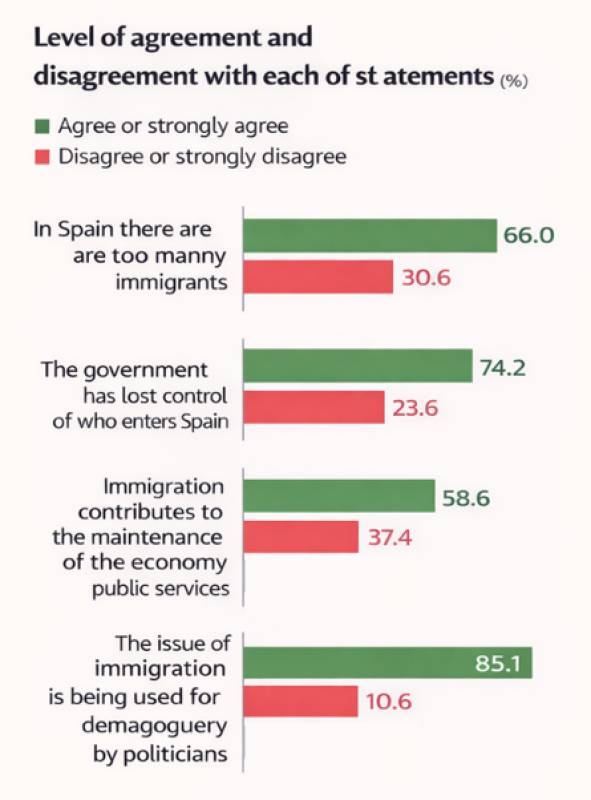
The survey highlights a striking contradiction. While 66% of those questioned believe there are too many immigrants in Spain, 58.6% also say immigrants contribute to maintaining the economy and public services. In other words, many residents are uneasy about the scale of arrivals but still recognise the role foreign nationals play in keeping key sectors running.
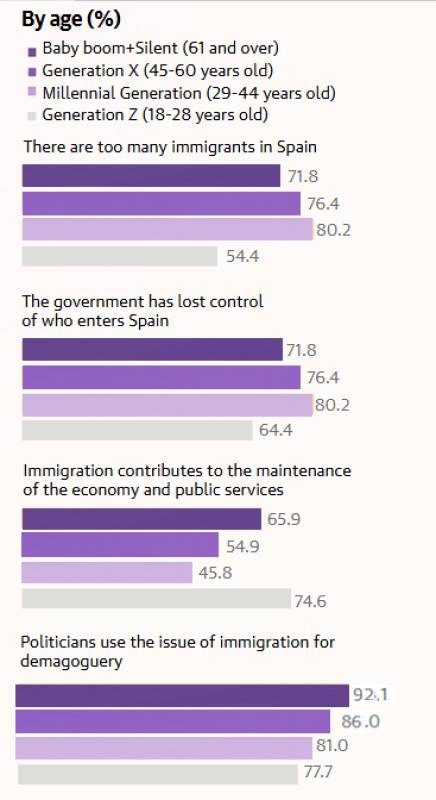
Opinion is sharply divided along generational lines. Generation Z, aged 18 to 28, is the most positive about immigration’s contribution, with almost three in four agreeing that migrants help sustain public services. They are also the least likely to say there are too many immigrants, at 54%. By contrast, millennials, aged 29 to 44, are the most critical. Fewer than 46% believe immigrants contribute to the state, while 80.2% say there is no effective control over who enters Spain.
Across all age groups there is broad scepticism about political handling of the issue. A large majority, 85.1%, believe politicians are using immigration for “demagoguery”, and 74% think the government has lost control of the borders.
Ideology also plays a clear role. Just 33.1% of far-left voters say there are too many immigrants, compared with 95.5% of those on the far right. Cemop notes that this “coincides with voting history”, with Vox voters showing the highest level of agreement.
The barometer concludes that immigration is now the most polarising issue in Murcia, cutting across age, education level and political allegiance, and shaping debate in a region where foreign arrivals continue to influence both demographics and public opinion.
Image: Jhon David/Unsplash
article_detail

|
Read more articles about Illegal Migration