







PROPERTY SEARCH

Spain has an island where the supernatural is part of everyday life
A survey has found that belief in paranormal experiences and superstitious practices are widespread among the local population
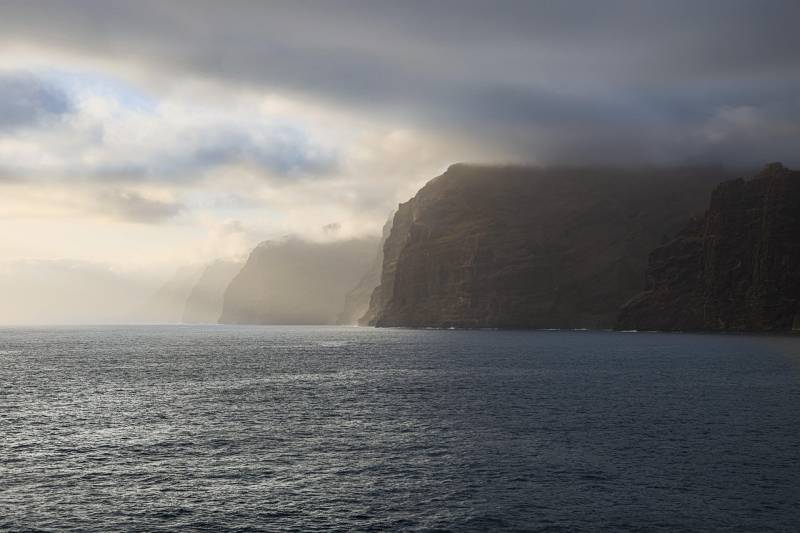 A survey has found that Tenerife has one of the highest proportions in Spain, and the highest in the Canary Islands, of people who have experienced things they cannot explain.
Data analysis company Research Frontier conducted the study for the website Casino.org to mark Halloween 2025, by questioning 10,000 people around the country.
More than one in four (26.3%) residents of Tenerife claim to have experienced something that defies logic.
The most common examples are the feeling of being watched for no visible reason, unexplained knocks or footsteps, sudden drops in temperature and objects moving without human intervention. To a lesser extent, people report silhouettes or figures, along with a range of situations that participants classify as “impossible”.
The same study ranks the province among the most superstitious in Spain, despite which only three in ten people describe themselves as such, while almost half admit to following protective rituals “just in case”.
It is worth looking at the cultural background to understand why stories of the unusual take such a strong hold in the region. The Canary Islands’ oral tradition has preserved legends linked to ravines, caves and hamlets that are preserved today in local routes and excursions.
The most frequently cited example is the Barranco de Badajoz, in Güímar, now a trail of fables and enigmas, filled with stories of lights, presences and disappearances. The well-known tale of La Niña de las Peras forms part of this repertoire, and has fuelled guided tours and travel features for years. Several national reports describe it as a “route of fear” that combines botany, hydraulic heritage and an unsettling atmosphere.
Another place associated with modern legends of rituals and strange phenomena is the Leperosierie de Abades, a complex of more than 35 buildings that was built in the 1940s as a leper colony but never used and was subsequently abandoned. The local press has described it as the most striking abandoned site in the Canary Islands, a claim that draws in the curious, photographers and content creators season after season.
Another striking revelation of the survey is something that the authors define as “hidden superstition”, i.e. people who claim not to believe but nevertheless often knock on wood, cling to a lucky charm or make a wish upon a star just in case.
Such everyday practices coexist with traditions of folk healing and esoteric consultations that remain part of island life, albeit less prominently than in past decades. Mentions of witches, tarot or ouija boards appear more as elements of popular heritage than as social norms, yet they still leave a mark on cultural identity and public conversation.
The wave of interest in the supernatural, which is reignited every year around Halloween, is not confined to the Canary Islands. “Scare tourism” is growing in Spain, with mainland sites also exploring their own dark histories, from former sanatoriums to ruined spas, through organised visits and media coverage. This context helps to explain why the islands, with their volcanic geography, water galleries and myths of the indigenous Guanche people, emerge as fertile ground for stories that blend history, landscape and collective imagination.
Research Frontier conducted its study between October 1 and 10, with a 2% margin of error and without samples from Murcia, La Rioja, Ceuta, Melilla or the Balearic Islands. The methodology captures perceptions rather than certifying phenomena, meaning that its value lies in the light it sheds on how society and culture can affect psychology.
In this light, Tenerife emerges as a “laboratory of wonder”, where the boundary between fact and legend is debated along footpaths, in squares and in newspaper archives. The island nurtures powerful narratives which attract readers, walkers and story seekers, a growing trend in both tourism and the media.
Image: marcelkessler / Pixabay








Contact Spanish News Today: Editorial 966 260 896 /
Office 968 018 268