













Work is now in progress to restore the dune areas at La Llana, El Mojón and Torre Derribada, all within the beautiful natural surroundings of the Parque Regional de las Salinas y Arenales de San Pedro del Pinatar. The idea behind it is to look after these delicate coastal areas while still allowing people to enjoy them in a way that doesn’t put pressure on the landscape.
Part of the work involves removing old sand traps and damaged fencing left from earlier conservation efforts and putting in new natural cane barriers and protective enclosures instead. These will help keep the dunes stable and steer foot traffic away from the most sensitive areas, which should limit further erosion over time.
Native dune plants, including dune juniper, will also be replanted to help hold the sand together and return the landscape to its natural state. Invasive species such as agave and sour fig are being cleared manually so the surrounding environment isn’t affected by heavy machinery. Environmental staff says this slower, hands-on approach gives the dunes the best chance to recover properly and adapt to changing conditions.
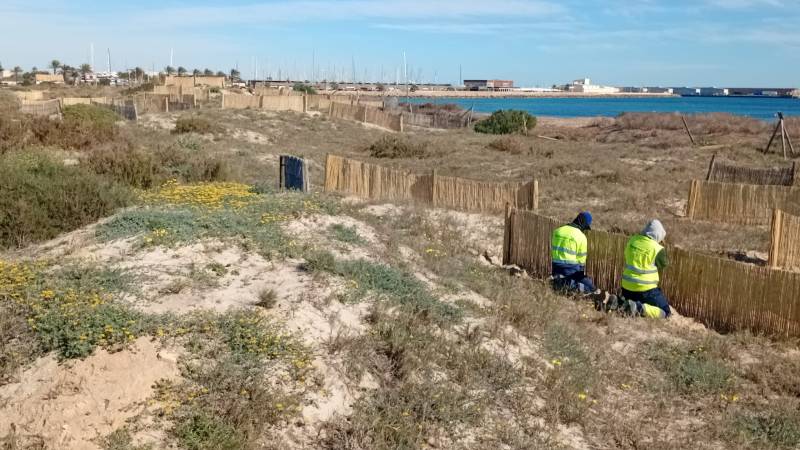
The work continues conservation efforts carried out between 2018 and 2022 and extends them to more sections of the coastline. Alongside the environmental benefits, the council believes it will also support a more sustainable style of beach tourism, with clearer walking routes, improved access and better protection for the natural setting people come to enjoy.
The €123,000 investment is funded through Next Generation EU as part of Spain’s national recovery programme, which supports projects focused on environmental protection and long-term tourism quality.
Regular visitors to this area will know it is one of the few coastal areas that still feels wild and unspoilt rather than built-up, where you’ll often spot cormorants skimming the water and flamingos passing overhead on their way to the salt flats. That untouched, slightly rugged feel is a big part of what makes the area stand out, and it’s exactly what this kind of work is intended to preserve.
You may also like: A history of San Pedro Del Pinatar
Image: San Pedro del Pinatar Town Hall
Other San Pedro del Pinatar Beaches